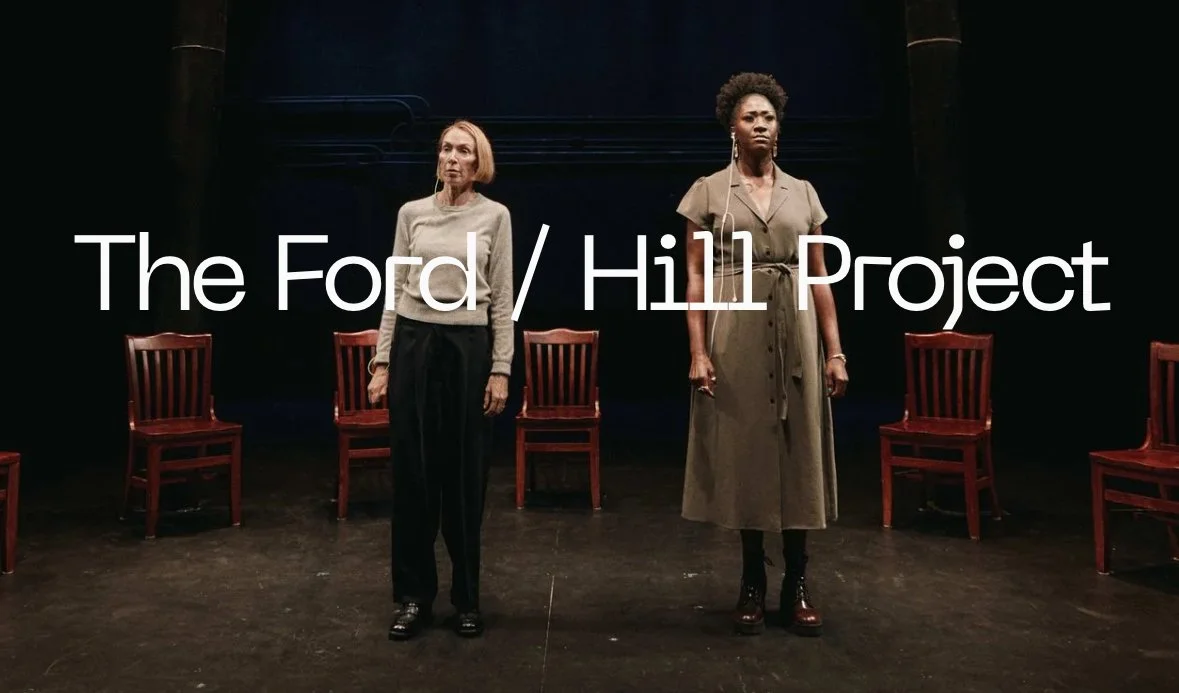
Our second sold-out, site-specific production of Tony Kushner’s A Bright Room Called Day is almost wrapping up. Last week we were honored with this rave review from Emily Nussbaum of The New Yorker. Read the excerpt below:
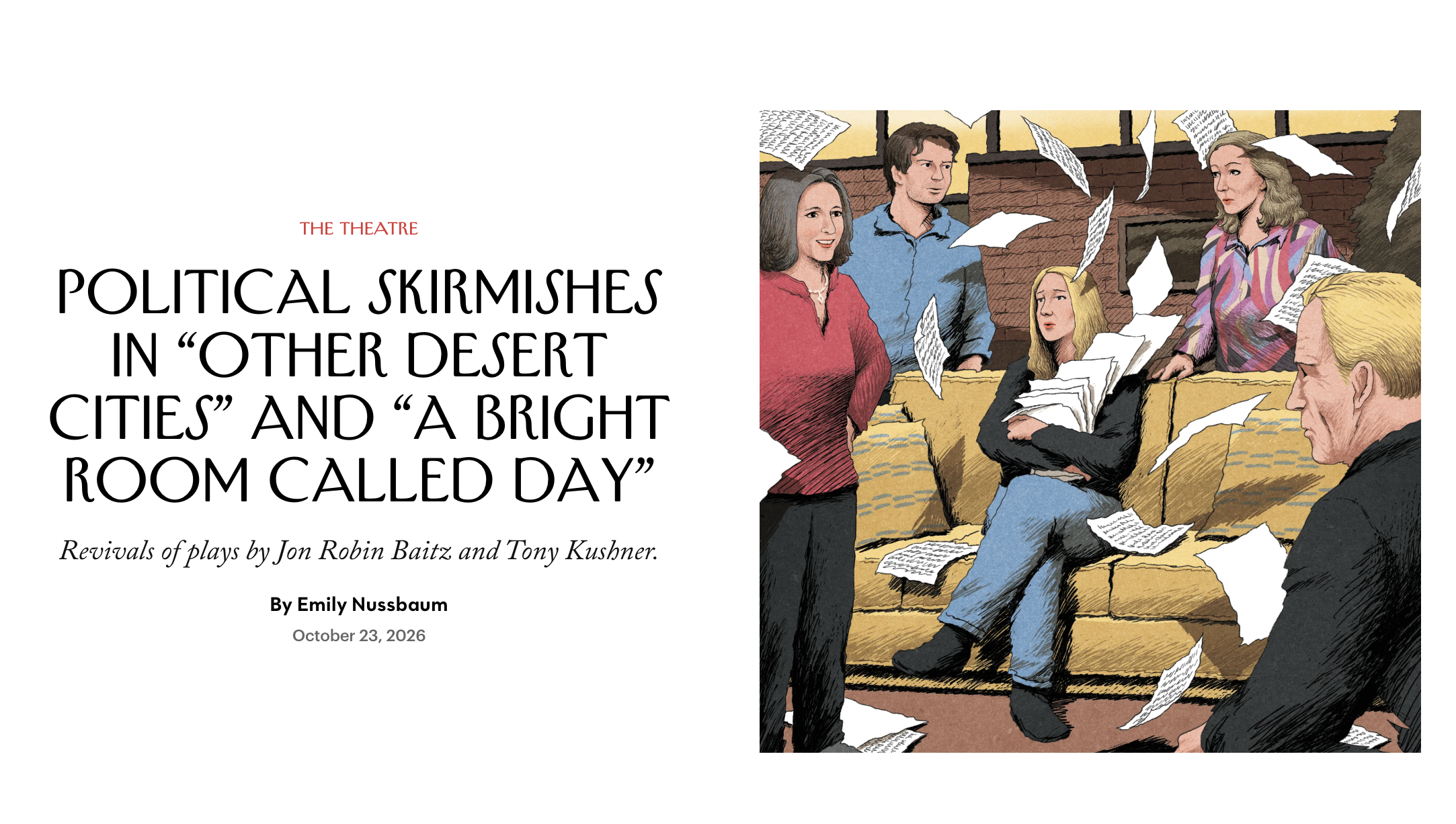
Two nights later, I went to Crown Heights to catch a revival of a play that felt much more timely, despite having débuted in 1987 and being set in the nineteen-thirties. A tiny, passionate production of Tony Kushner’s “A Bright Room Called Day,” directed by Rachel Gita Karp, was being staged in a town house in the heart of Brooklyn’s so-called Commie Corridor, which helped steer Mayor Zohran Mamdani to victory. As I reclined on a sofa, sipping rosé, a cadre of Berlin bohemians—Reds, fellow- travellers, anarchists, and homosexuals; actors, socialist-realist painters, and writers—began celebrating New Year’s Eve, 1932, at a kitchen table just a few feet away. Lifting glasses of champagne, they toasted, giddily, to “health, happiness, and relative safety on this fierce and splendid night and for many years to come.” It flashed me back to nights of political hope in recent decades, and I felt sick.
“Day” is Kushner’s début—his early problem play, which premièred, in San Francisco, four years before “Angels in America.” At the time, the project felt hyperbolic, largely because of the finger-wagging interventions of Zillah, a modern-day punk anarchist who ranted about Reagan as a new Hitler. (With “Angels,” Kushner found a more fruitful comparison: Roy Cohn and the Red Scare.) Zillah’s speeches have since been reworked, most notably in a 2019 production in which a Kushner-y character called Xillah debated her, framing the story with an anxious meta-narrative. By then, the Hitler comparisons had a different feel: if Kushner had once been the boy who cried wolf, the wolf was at the door.
In 2026, the gemlike Brooklyn venue lent Kushner’s project a magical quality, turning the audience into ghosts from the future, eavesdropping on the fall of the Weimar Republic but unable to intervene. There was no meta frame, and although Zillah still chimed in, it was in smaller doses—and the truth is, we no longer needed her guidance. As the characters playfully debated the rise of Fascism, the dialogue often felt transcribed from some Brooklyn polycule. Is class the best lens for understanding Hitler’s appeal, or is daddy worship? Can anything be learned from sleeping with Nazis? When, ultimately, is it time to flee? The cast was excellent, particularly a sad, sexy Molly Rose Heller as Agnes, a movie actress clinging to her perfect Berlin rental, Jonathan Bock as her Trotskyite beau, a poignant Portal Rose as a sexual adventurer, and Aja Downing as a morally malleable starlet toying with working for the Reich.
Still, the real star was Kushner’s text, a message in a bottle. Witty, bitter, flamboyant, and emotionally grounded, the dialogue swings, delightfully, between intimate exchanges and grandiloquent soliloquies, capturing the vulnerability of idealists in the face of evil. When the Devil himself appeared, in a puff of smoke, the town-house alarm went off and the play paused. For a moment, it all seemed, surreally, to be part of the production: yet another alarm to ignore so that the show could go on.